Craft & Care
How the mat is made — and how to look after it. Cotton improves with regular washing. Understanding the construction helps you use it better.
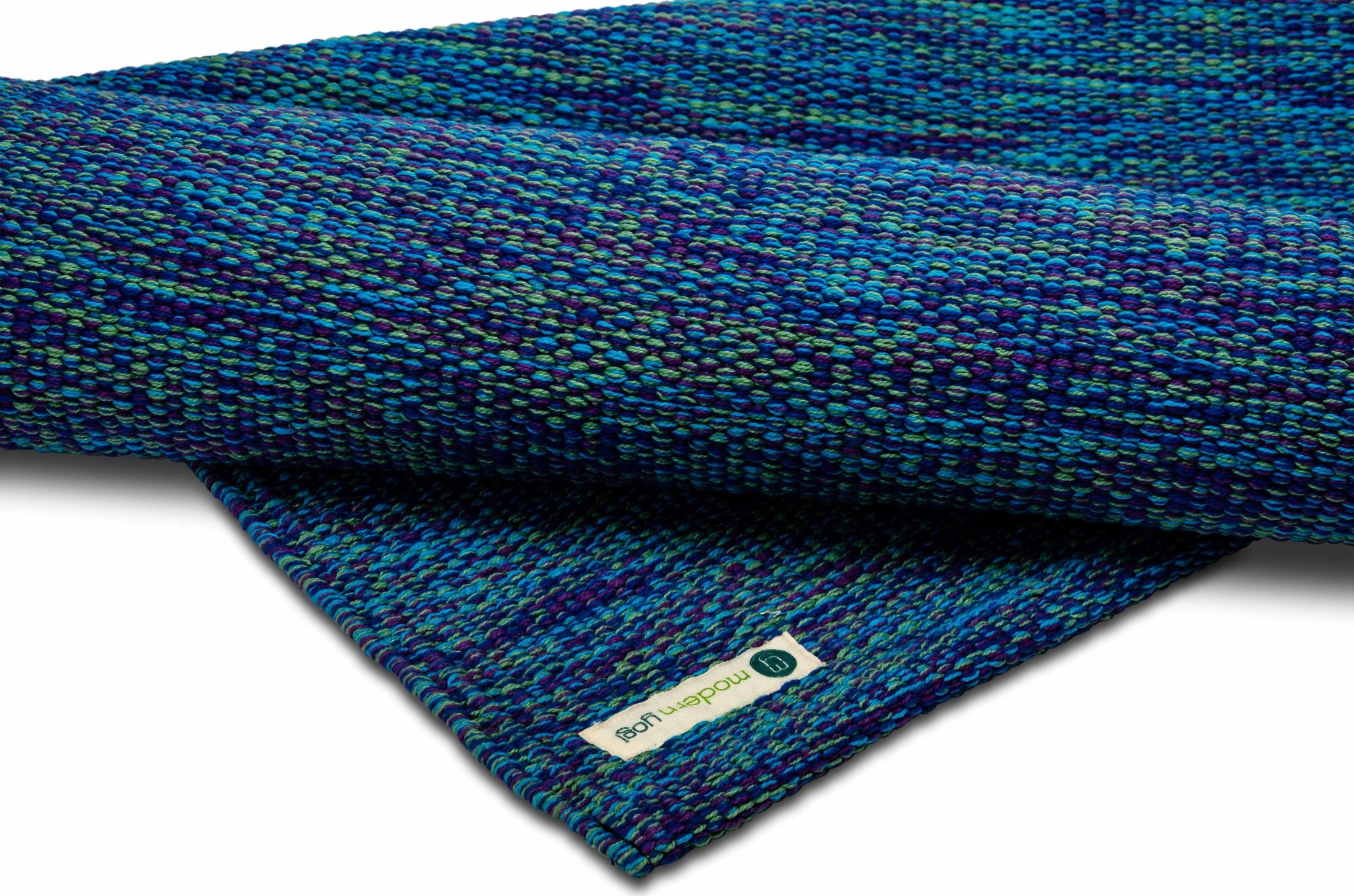
Most cotton yoga mats are flat-woven rugs.
This is not.
The dual-weave process creates two interlocked layers of cotton — forming a dense, dimensional surface rather than a flat fabric. This structure is what gives the mat grip, thickness, and durability that a single-layer weave cannot achieve.
Each mat is woven by hand on traditional looms in India by artisans using centuries-old techniques. Minor variations in colour and texture are signs of authentic handcraft.
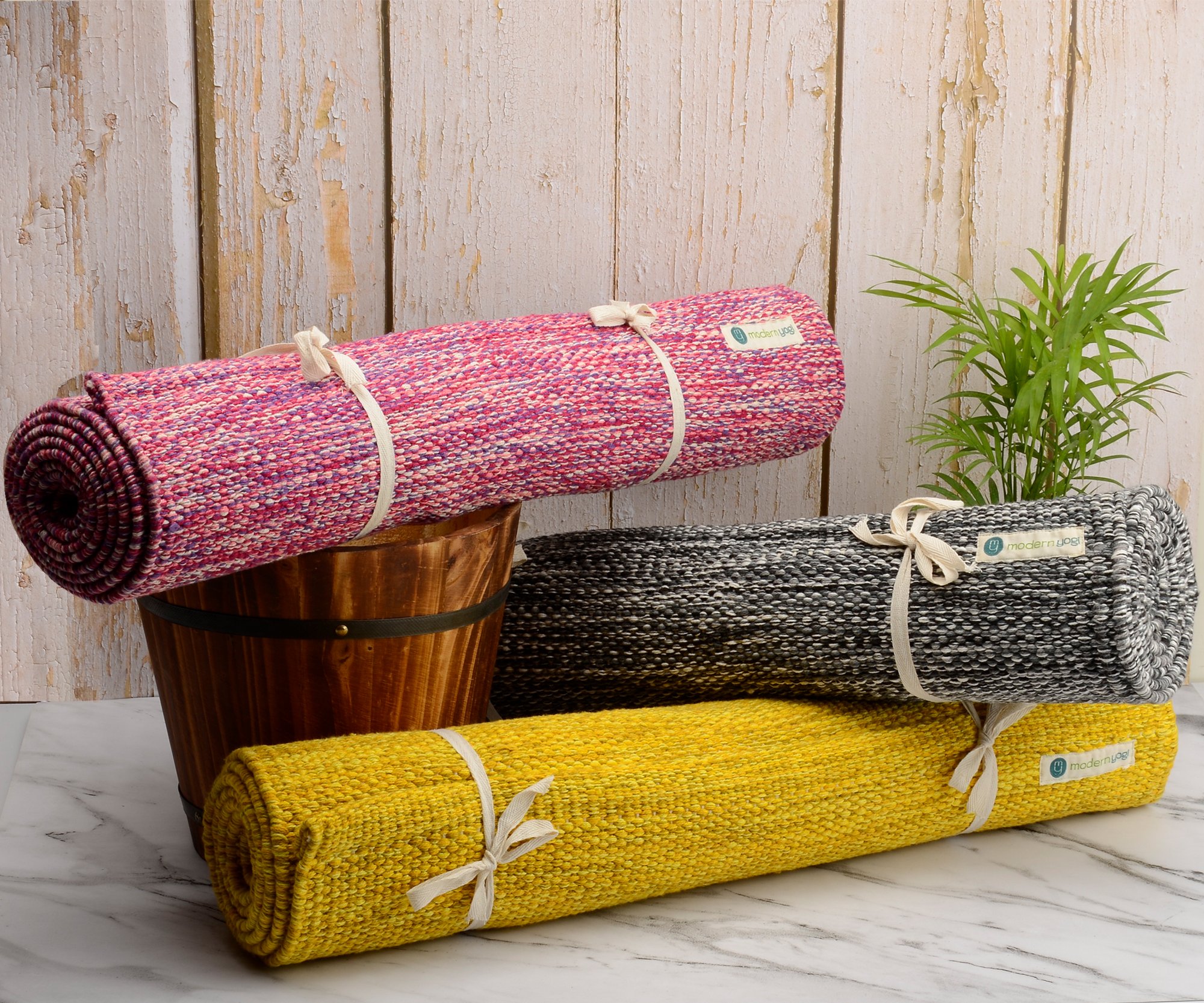
Cotton fibres are naturally hygroscopic — they absorb moisture from hands and feet rather than repel it. The more you practise, the more the fibres open up. The opposite of rubber, which degrades over time.
Cotton breathes. Heat does not build up beneath hands and feet. Sweat is absorbed into the weave rather than pooling on the surface — improving traction in dynamic flows.
Each mat is woven on traditional looms by artisans practising centuries-old techniques. Minor variations in colour and weave are characteristic of authentic handcraft, not defects.
The surface is the weave itself. Nothing applied to create grip. Nothing that wears off. Nothing that off-gasses onto the surface you practise on.
Unlike rubber mats which require special cleaners and degrade with washing, cotton mats are simple to maintain and become better with regular care.
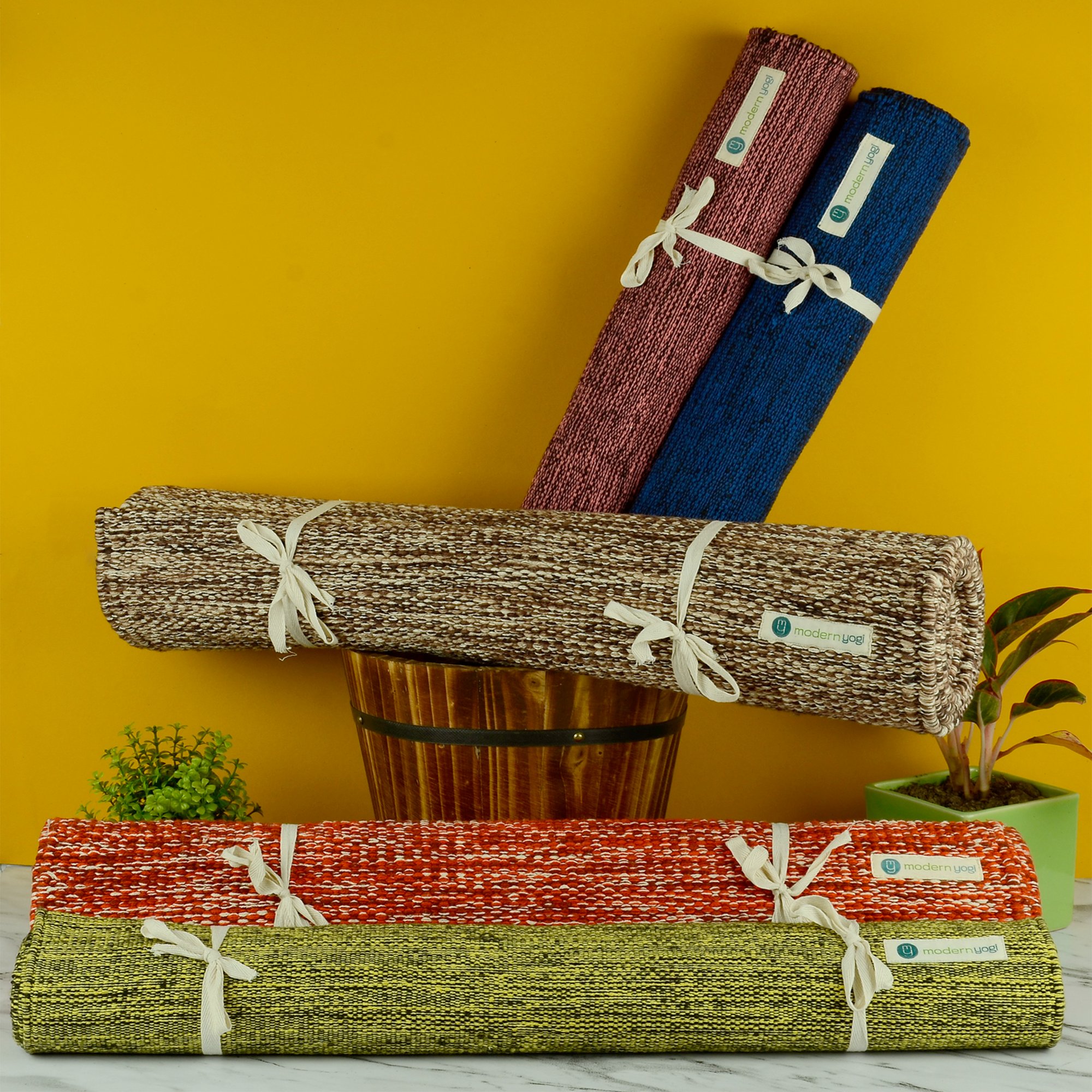
Wash your mat before first use. This softens the cotton fibres, reduces any natural cotton smell, and begins the process of opening the weave for better grip.
Wash every 2–4 weeks with regular practice. Cotton improves with washing — fibres become more absorbent and grip improves over the first several washes.
Natural plant-dyed textiles may release a small amount of colour in the first few washes. This is normal and stabilises quickly. Wash separately initially.